
Dreaming of stepping away from conventional living and embracing an off-grid lifestyle? This guide highlights the best places to live off the grid in 2025, ideal for those seeking independence, sustainability, and adventure.
Whether you’re planning to move into a tiny home or boondock for an extended period, we’ll explore how these locations support renewable energy, self-sufficiency, and community connection. Plus, we’ll discuss why pairing Ionic lithium batteries with solar panels is essential for reliable energy storage.
Understanding Off-Grid Living & Top Places to Try It
Living off-grid allows you to create a lifestyle tailored to your preferences, whether setting up a fully equipped RV or embracing simplicity in a tiny home. Many people find that living off the grid helps them declutter, focus on what’s important, and reconnect with nature. The goal is to be self-sufficient and eco-friendly by using renewable energy, managing resources wisely, and reducing reliance on traditional utilities.
Energy independence is a key aspect of off-grid living, with solar panels and in some cases, even wind turbines providing power. Composting toilets, rainwater collection systems, and growing your own food are all ways to enhance sustainability. But you can do as little or as much of this as you want!
Whether boondocking or setting up a permanent off-grid home, it’s all about freedom, resilience, and building a life on your terms. Below, we’ll dive into the best places that offer different aspects of off-grid living, such as accessibility, climate, and community support.
1. Northern California
Northern California is an excellent destination for off-grid living, especially for those who value self-sufficiency in natural, diverse landscapes. The region’s mild climate supports year-round farming and renewable energy options like solar and wind power; ideal for those traveling in RVs or setting up small, independent homes. Moreover, Northern California’s abundant natural resources and thriving off-grid community provide ample support for those looking to adopt a self-sufficient lifestyle.
2. Oregon
With its long growing seasons and open spaces, Oregon is perfect for cultivating self-sufficiency. Areas like the Three Rivers Recreation Area offer community support for newcomers to off-grid living. Known for its ample sunlight and sense of community, it’s also a place where you can enjoy outdoor activities like boating and hiking. These features, combined with Oregon’s lenient building codes and diverse landscapes, make it easier for individuals to embrace a self-sufficient lifestyle with the help of solar panels and lithium batteries.
3. Colorado
Colorado’s scenic mountain views and abundant natural resources make it a prime location for off-grid living. The state has a growing off-grid community that can help newcomers transition smoothly. Its sunny days and reliable wind make it perfect for generating power through renewable energy solutions. Furthermore, Colorado’s commitment to sustainable living and renewable energy initiatives provides a supportive environment for those seeking an alternative lifestyle.
4. Alabama
Alabama’s affordability makes it attractive for those new to off-grid living. The state boasts a low cost of living, easy access to water from numerous rivers, and about 220 sunny days a year. For RVers and boondockers, batteries paired with solar panels can store ample power, ensuring uninterrupted living in this budget-friendly state. Alabama’s friendly local laws and access to fertile land also make it an ideal location for growing your own food and achieving self-sufficiency.
5. Florida
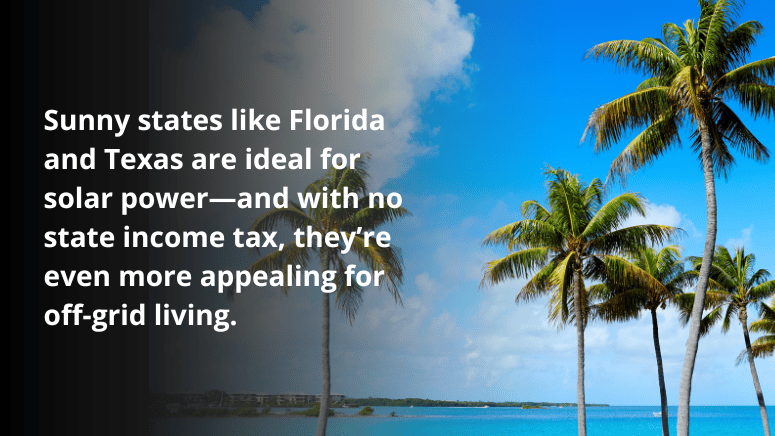
Florida’s warm climate and abundant sunshine make it a great place for solar-powered off-grid living. While the state’s hurricane season poses challenges, well-prepared RVers can mitigate risks by choosing locations with supportive infrastructure. Counties like Liberty, Collier, Lee, Monroe, and Okeechobee offer plenty of open space and opportunities for self-sufficient living. Florida’s lack of state income tax also helps keep costs manageable. In addition, the state’s vibrant off-grid communities provide valuable resources and support for those looking to embrace a self-reliant lifestyle.
6. Montana
For those seeking seclusion and vast open spaces, Montana is a dream. The state’s sparse population, few building codes, and abundant natural resources make it an appealing choice for sustainable, off-grid lifestyles. Whether raising animals or growing crops, Montana’s wide-open land provides endless possibilities for independent living. However, the state’s harsh winters and frigid temperatures require careful preparation, particularly for heating and food storage. That said, Montana’s commitment to preserving its natural beauty and resources makes it an attractive option for off-grid living.
7. Texas
Texas is a vast state offering both land affordability and friendly building codes, especially in rural areas. The state’s support for renewable energy through initiatives like the Renewable Energy Investment Tax Credit can make it easier to implement off-grid power solutions. No state income tax adds to its appeal for off-grid adventurers. Additionally, Texas boasts a diverse climate, ranging from arid deserts to lush forests, providing various options for those seeking a unique off-grid lifestyle tailored to their preferences.
8. North Carolina
With its moderate climate and rich soil in many areas, North Carolina is an excellent choice for growing food and harnessing renewable energy. Off-grid communities in the state provide support for new arrivals, offering tips on setting up effective water collection systems and maximizing the use of solar power. The state’s diverse landscapes also allow for numerous agricultural pursuits, making it easier to achieve a self-sufficient lifestyle.
9. Tennessee
Tennessee’s relaxed building codes and accessible water sources make it ideal for off-grid living. Communities like The Farm exemplify a self-sufficient way of life. Here, people benefit from affordable land and supportive programs that ease the transition to off-grid independence. The state’s moderate climate further supports year-round growing and renewable energy initiatives, enhancing the appeal for off-grid enthusiasts.
10. New Mexico
New Mexico is known for its affordability and diverse landscapes, providing ample opportunities for solar energy generation. The state’s low cost of living and vibrant cultural scene make it a unique place to start your off-grid journey. A reliable water system is essential in this arid climate, but once established, it offers the chance to fully embrace self-sufficiency. New Mexico’s wide-open spaces also allow for creative land use, supporting both traditional and innovative off-grid setups.

Key Considerations for Choosing an Off-Grid Location
Before you pick the perfect spot for your off-grid lifestyle, it’s important to think about a few key factors. Every location has its own pros and cons that can affect how easily you can live off the land. Things like water availability, weather, land costs, and local rules all play a role in your off-grid setup success. Here’s a simple look at the main things to consider when choosing where to live off the grid.
Water Access
Reliable water access is essential for totally off-grid living. Wells, springs, or rainwater collection systems are vital for maintaining independence. Be sure to research local regulations around water collection to ensure compliance.
Climate and Weather
A region’s climate plays a significant role in energy production and food cultivation. States with ample sunshine, like Florida and Texas, are great for solar power. Areas like Montana, with harsh winters, require additional preparation but can still support off-grid living with proper planning.
Land Prices and Property Taxes
Land affordability and property taxes vary widely. Alabama and Tennessee offer low property taxes and inexpensive land, making them appealing choices for budget-conscious individuals or families. States without state income taxes, such as Texas and Florida, also lower overall living expenses.
Local Building Codes and Zoning Laws
Some states, like Tennessee and certain counties in Texas, have relaxed building codes that simplify setting up an off-grid home or RV setup. Familiarizing yourself with these regulations helps avoid costly hurdles when establishing your off-grid lifestyle.

Why Pair Off-Grid Living with Ionic Batteries?
An off-grid lifestyle demands reliable energy storage, especially in mobile setups like RVs and tiny homes. Ionic lithium batteries stand out for their durability, efficiency, and safety. They provide consistent power, store solar energy effectively, and last 10+ years, giving you peace of mind and energy independence.
Their lightweight nature and ability to handle thousands of charge cycles make them perfect for both permanent homes and mobile living solutions. With built-in Bluetooth capabilities, Ionic batteries also allow easy monitoring of power levels, ensuring you stay powered up wherever your off-grid journey takes you.
Conclusion: Embracing the Off-Grid Lifestyle
Living off the grid is a big change that offers freedom, sustainability, and a strong sense of community. Whether you settle in the sunny open spaces of Texas, the green areas of Oregon, the quiet beauty of Montana, or embrace a nomadic RV lifestyle with boondocking, each option provides unique opportunities to harness renewable energy and become self-sufficient. The combination of affordable land, supportive local regulations, and abundant natural resources makes these places ideal for off-grid living. With the right skills, preparation, and tools like Ionic lithium batteries, you can build a life that aligns with nature and your values. As you begin this journey, remember that off-grid living is about resilience, adaptability, and enjoying life on your terms.
Did you enjoy this post? You’ll probably like this one too: Solar Panels in Series or Parallel: Which is Best for Your Setup?

Frequently Asked Questions
What does living off the grid mean?
Living off the grid means embracing a self-sufficient lifestyle, free from reliance on traditional utilities. Whether you’re setting up a permanent home, traveling in an RV, or living in a tiny house, it’s all about creating a sustainable and independent way of life.
What are some best states for living off the grid?
For those eager to live off the grid, Northern California, Oregon, Colorado, and New Mexico offer excellent opportunities. These states provide diverse landscapes and abundant resources that can support a self-sufficient lifestyle, whether you’re building a home, traveling in an RV, or settling into a tiny house.
What skills are essential for successful off-grid living?
For short-term off-grid living (like seasonal RV boondocking) understanding solar energy, water filtration, and waste management is key. Learning how to manage food, shelter, and power is essential.
What type of battery is best for off-grid living?
Lithium batteries are a standout choice for off-grid living thanks to their efficiency, longevity, and minimal maintenance needs. They are lightweight, last longer than traditional lead-acid batteries, and can handle more charge cycles. Many off-grid setups, like RVs or tiny homes, benefit from using Ionic lithium batteries, which provide reliable power for a self-sufficient lifestyle.