
If you’re on the hunt for a new battery—whether it’s for your boat, RV, solar setup, golf cart, or lawn mower—you’ve probably heard the terms starting battery, deep cycle battery, and dual purpose battery. It can get confusing if you’re not sure what the difference is.
Here’s the thing: these batteries are designed and built for different jobs. Using the wrong one can lead to headaches like poor performance, shorter battery life, or power failures when you really need energy. So knowing which one is right for what you’re powering is important.
In this post, we’re breaking down the key differences between deep cycle and starting batteries (plus dual purpose), where each works best, and why lithium batteries are a smart move no matter which type you pick.
What Is a Starting Battery?
A starter battery’s job is simple: deliver a quick, powerful burst of energy to start an engine. When you turn the key in your car or boat, it’s the starting battery kicking things off.
Inside, these batteries have thin plates that let them release a huge amount of current fast. That power spins your starter motor and gets your engine running. Once your engine is on, the alternator recharges the battery and runs other electronics while you’re moving.
But here’s the catch: starting batteries aren’t built for long, slow power use. Running electronics or appliances on one for too long can cause damage. They’re made for short, intense bursts, not steady power over time.
Best use: Starting batteries are perfect if your main power need is just to start an engine.

What Is a Deep Cycle Battery?
Deep cycle batteries are the endurance champs. Instead of short bursts, they’re made to provide steady power over hours. That’s why they’re great for running electronics, motors, or appliances that need to keep going.
You’ll see deep cycle batteries in:
- RVs (running lights, fridges, and gadgets)
- Boats (trolling motors and onboard systems)
- Off-grid solar setups
- Golf carts and scooters
- Backup power systems
Inside, they’ve got thicker plates that handle deep discharges—sometimes up to 80% or more—without damage. They can take hundreds or thousands of charge cycles, depending upon which battery type you choose (Lead acid, AGM, lithium, etc.). Learn more about The Deep Discharge and How Can It Affect Your Battery here.
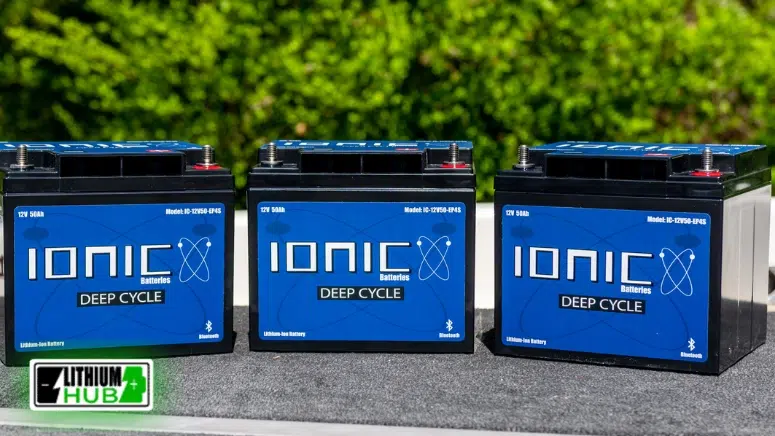
Lead-acid deep cycle batteries have been around forever, but lithium deep cycle batteries (like our Ionic lithium batteries) take things to the next level: longer life, faster charging, more usable power, and less weight—plus no maintenance.
Best use: Use deep cycle batteries when you need steady, reliable power for hours on end—especially when your engine or main power is off.

What About Dual Purpose Batteries?
Dual purpose batteries are a bit of a hybrid—they do a decent job starting your engine and also power your accessories for a moderate amount of time. They’re great when space is tight.
Common uses include:
- Small boats with only one battery spot
- Compact campers and trailers
- Vehicles with light accessory loads
- Power sports and light-duty gear
The trade-off? They can’t crank as hard as a dedicated starting battery and don’t last as long as a full deep cycle battery. So if you need serious power for starting or long runs, two separate batteries usually make more sense.
That said, a good dual purpose lithium battery can be a solid, simple option for moderate needs.
Best use: Choose a dual purpose battery if you want one battery to handle starting and some accessory power.
Deep Cycle vs Starting Battery: Quick Comparison
Still not sure? Here’s the quick rundown:
- Starting Battery: Best for cranking engines only. Avoid deep discharging.
- Deep Cycle Battery: Great for running electronics and appliances for hours.
- Dual Purpose Battery: A flexible middle ground when space and power needs are moderate.
What’s right for you depends on how you use your gear and how long you need power.

Lead-Acid, AGM, or Lithium? Why Battery Chemistry Matters
Once you’ve decided on the battery type—starting, deep cycle, or dual purpose—the next step is choosing the battery chemistry. That means what’s inside the battery that stores and releases power.
Lead-acid batteries are the oldest and most common type. They’re usually the cheapest option but come with some real drawbacks:
- Heavy and bulky
- Slow to charge
- Need regular maintenance (like topping off water)
- Shorter overall lifespan
- Can get damaged if deeply discharged often
AGM (Absorbent Glass Mat) batteries are a step up from traditional lead-acid. They’re sealed and maintenance-free, and handle vibration and temperature changes better. They also charge faster and last longer than standard lead-acid batteries. But they still have limits on how deeply you can discharge them, and they’re heavier and less efficient than lithium options.
Lithium batteries, especially lithium iron phosphate (LiFePO4), fix most of these problems. At LithiumHub, our Ionic lithium batteries come with a built-in Battery Management System (BMS) that protects your battery from overcharging, overheating, short circuits, and over-discharging. What you get with lithium:
- Up to 5,000 partial charge cycles — that’s years longer than lead-acid or AGM
- 80–100% usable capacity (meaning you get more of the battery’s power)
- Much faster charging times
- Up to 70% lighter weight — easier to handle and install
- Bluetooth monitoring right on your phone
- Maintenance-free and non-toxic
Whether you’re heading off the grid, boating, or working on the road, lithium batteries give you longer life, more reliable power, and less hassle.
Can You Get Lithium Starting and Dual Purpose Batteries?
Absolutely! We carry lithium batteries for all kinds of needs—not just deep cycle. Here’s how to tell them apart:
- Ionic starter batteries are red and designed to deliver quick bursts of power to crank your engine. Plus, they have a built-in emergency start feature for extra peace of mind.
- Our deep cycle batteries are blue and made to provide steady, long-lasting power for running electronics and motors.
- We also carry a couple of dual purpose batteries that do both—starting and deep cycling. For example, we have two models of the 12V 150Ah Dual Purpose Starter Lithium Deep Cycle Battery—one with a built-in heater for cold weather and one without.
Not all lithium batteries are made for starting use, so it’s important to check the cold cranking amps (CCA) and make sure the battery is tested and rated for that. We clearly label our batteries, making it easy to find the right one for your needs.
Whether you need to start your motor, run your trolling motor, or both, we’ve got you covered.

Final Thoughts: Pick the Battery That Fits You
Starting an engine? A starter battery delivers the quick, powerful bursts of energy you need to get moving—reliable every time.
Powering devices or appliances over long periods? Deep cycle batteries provide steady, consistent power that won’t quit, perfect for RVs, boats, off-grid solar setups, and more.
Want the best of both worlds? Our dual purpose batteries make life easier by combining starting power and deep cycling in one efficient, hassle-free package.
But here’s the real game-changer: switching to lithium means you’re choosing batteries that last longer, charge faster, and handle thousands more discharge cycles than traditional lead-acid batteries. That means fewer replacements, less downtime, and more freedom to focus on what matters—your adventures.
At LithiumHub, we don’t just sell batteries—we offer peace of mind. Our Ionic Lithium batteries come packed with advanced features like built-in Bluetooth for easy monitoring, integrated Battery Management Systems (BMS) for safety and optimal performance, and starter batteries with built-in emergency start capability. Plus, our expert U.S.-based support team is ready to help you find the perfect battery for your setup and journey.
Don’t settle for less. Choose LithiumHub and experience the difference high-quality, trusted lithium batteries can make.

Frequently Asked Questions
What’s the difference between a starting battery and a deep cycle battery?
A starting battery’s main job is to deliver a quick burst of power to start your engine. A deep cycle battery is built to provide steady power over a longer time and handle being drained and charged repeatedly. If you’re running lights, appliances, or electronics, a deep cycle battery is the better choice.
When does a dual purpose battery make sense?
If you want to start your engine and power some accessories but don’t have space for two batteries, a dual purpose battery can be a good middle ground. It offers decent starting power plus enough juice to run smaller gear—perfect for small boats, campers, or tight spots.
How can I make my battery last longer?
Taking a few simple steps helps a lot. Use the right charger, don’t drain it too much, and keep it stored somewhere cool and dry when you’re not using it. If you’re using lithium, the Battery Management System (BMS) does a lot of the work for you—but it’s still smart to watch how you charge and use it.
What makes lithium batteries better?
Lithium batteries, especially LiFePO4, last way longer, weigh less, charge faster, and give you more usable power. No maintenance, no acid leaks, no fuss. Plus, Ionic batteries come with Bluetooth monitoring, so you can check on your battery’s health right from your phone.
How do I know which battery type I need?
Think about what you’re powering. Starting an engine? Go with a starting battery. Running gear for hours? Deep cycle is your pick. Need both in one battery? Dual purpose could work. If you’re still not sure, just reach out—we’re happy to help you find the right one.