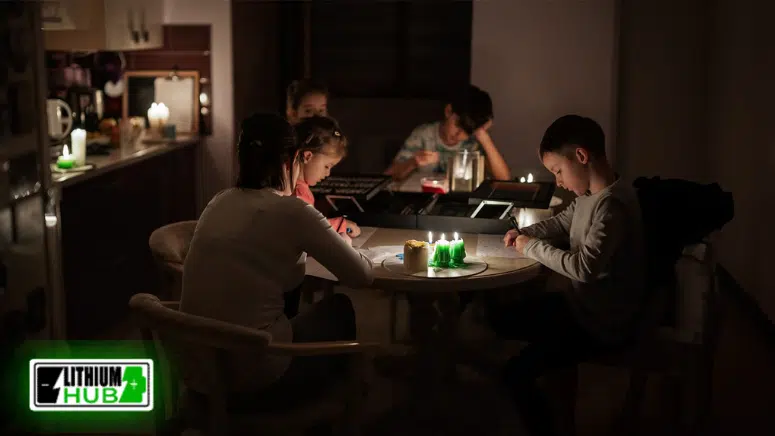

If you’re anything like us, when the power goes out, the fridge and freezer are the first things you worry about. Will they be out for thirty minutes or days? And how much food (money) is going down the drain if it’s the latter?
A good power station (especially one designed for refrigerators) makes those worries go away. Because a reliable refrigerator power station keeps your food cold and unspoiled.
But what makes a power station reliable? Which ones are designed specifically for refrigerators and freezers? How do you choose the best one?
In this guide, we’ll show you what to look for to find the strongest, most reliable refrigerator-ready power station. We’ll cover running watts, startup surge, how much battery capacity will go the distance, and more. We’ll also cover the common and critical mistakes people make when shopping, so you can skip the guesswork. Let’s get to it.
Why Power Stations Are So Helpful for Keeping a Refrigerator Running

When the power goes out, a power station can keep you from losing a fridge full of food. It can keep your refrigerator running through a short outage (and with solar charging, it can help you stretch through longer ones too).
It can also help protect temperature-sensitive essentials, like medications, insulin, certain antibiotics, and breast milk. For those situations, backup power isn’t just convenient; it’s peace of mind.
Compared to a gas generator, power stations are a cleaner and quieter option during outages. There’s no gas to store, no fumes, and no engine noise, and you can run them indoors and plug your fridge in like normal.
If you want to make things even easier during an outage, it helps to have your setup ready ahead of time. With the right model and setup, your refrigerator can stay powered with very little interruption when the grid drops.
Just remember, a refrigerator isn’t a small load, so you’ll want enough output and battery capacity to run it reliably. And if you’re planning for longer outages, solar charging is what keeps you from being stuck on a countdown.
The Most Important Things to Look for in a Power Station for Your Fridge
Fridges are a little different than most electronics. When the compressor turns on, it needs a quick burst of power, then settles into a lower draw while it runs.
So instead of getting lost in specs, focus on four things:
- AC output and surge capability: Make sure the power station can handle the fridge when the compressor kicks on, and can keep it running once it is going. On spec sheets, this is usually listed as continuous output plus surge.
- Battery capacity: Capacity is measured in watt-hours. That number is what controls runtime. A 1200Wh power station can be a great food saver for outages, but how long it lasts depends on your fridge, room temperature, and how often the door opens.
- Pure sine wave output: This is the safest option for modern refrigerators with electronic controls because it is closer to normal wall power.
- Recharge options: If you only need short backup, wall charging is enough. If you are planning for longer outages, solar is what makes the setup feel realistic. The GenBox 1200S Slim is solar-ready up to 400W, so you can top it off during the day instead of watching the battery percentage count down.
Finding Your Refrigerator’s Power Rating
Before you buy a power station, you’ll want to get a rough idea of what your refrigerator actually needs. You don’t need perfect numbers, but you do want something better than guessing.
Where to find the specs
Most refrigerators have a sticker or label with basic electrical info in one of these spots:
- Inside the refrigerator compartment (often on a side wall)
- Inside the freezer section
- On the back of the fridge, near the compressor area
- Behind the lower front panel or grille (on some models)
What to look for on the label
You might see a few different numbers.
Here’s what they mean in plain English:
- Watts (W): how much power it may use while running (sometimes shown as a max)
- Amps (A): a way of showing electrical current
- Volts (V): usually around 120V in most North American homes
- Energy use per year (sometimes shown on an EnergyGuide label): a helpful clue for average power usage and typically more useful for estimating day-to-day consumption than compressor startup needs
If you only see amps, here’s the easy math
If your label lists amps but not watts, you can estimate watts like this:
Watts = Amps × Volts
So if a fridge shows 6.5 amps at 115V, that’s about 748 watts at peak. Just keep in mind that this is often a worst-case or “max” number, not what it uses all day long.
Why the label can look higher than real life
Your refrigerator doesn’t run nonstop. It cycles on and off throughout the day, and how often it runs depends on things like room temperature and how often you open the door. That’s why a fridge can have a “high” looking label number but still average a much lower amount of power over time.
The most accurate option (if you want it)
If you want to remove the guesswork, use a plug-in power meter (often called a Kill-A-Watt style meter). Plug it into the wall, plug your fridge into it, and let it run for 24 hours.
That will show you:
- What the fridge draws while running
- The highest spike occurs when it starts
- How many watt-hours it uses over a full day
That last number makes choosing a power station way easier.
How to Calculate the Battery Capacity You Need
Once you’ve got a rough idea of your fridge’s power use, the next step is figuring out how long you want it to run. Power station capacity is measured in watt-hours (Wh), which is basically how much energy is stored in the “tank.”
A beginner-friendly way to estimate capacity is:
Capacity (Wh) = Average watts × Hours you want ÷ 0.8
That 0.8 accounts for real-world losses (the power station has to convert battery power into normal AC outlet power, and that conversion isn’t perfect).
Note: High-efficiency power stations like the GenBox 1200S Slim have ~90% round-trip efficiency, so you can use ÷ 0.9 instead of ÷ 0.8 for more accurate estimates with those models. We’re using 0.8 here as a conservative baseline that works across most power stations.
Quick examples
8-hour outage
If your fridge averages about 150W, then:
150 × 8 ÷ 0.8 = 1,500Wh
In real life, aiming closer to 1,800Wh gives you a safer cushion.
24-hour outage
If your fridge averages about 180W, then:
180 × 24 ÷ 0.8 = 5,400Wh
For extended outages, you’re usually looking at either a larger battery setup or recharging from solar panels, a generator, or returning grid power.
3-day outage
If your fridge averages about 160W, then:
160 × 72 ÷ 0.8 = 14,400Wh
For multi-day coverage, most people either go big or plan for recharging, because that’s a lot of stored energy.
Don’t forget the “little” things
Most people don’t power only a fridge.
Even small extras add up over hours:
- Phone charging
- A lamp
- A router
- A CPAP machine
- A fan
If you plan to run anything besides the fridge, include that in your estimate so you don’t end up disappointed with runtime.
Power Station Sizing Guide by Refrigerator Type

These are ballpark numbers, but they’ll get you into the right category fast. Then in the next section, you can dial it in using your fridge’s label or a power meter.
Quick sizing chart
Mini and dorm fridges
- Typical running draw: 50 to 100W
- Typical starting surge: 150 to 400W
- Recommended capacity: 500 to 1,000Wh
- What to expect: often 6 to 12 hours, sometimes more, depending on cycling and room temperature
Standard home refrigerators
- Typical running draw: 100 to 250W
- Typical starting surge: 600 to 1,200W
- Recommended capacity: 1,200 to 2,000Wh for 8-12 hour coverage
- What to expect: 8-12 hours for most efficient fridges; a 2000W portable power station can run most refrigerators safely if its surge rating also covers compressor startup, and models like the GenBox 1200S Slim (1,382Wh) work well in this range, especially with solar recharging capability
Large fridges, side by sides, and units with ice makers
- Typical running draw: 150 to 350W
- Typical starting surge: 1,000 to 1,800W
- Recommended capacity: 2,500Wh and up
- What to expect: often 6 to 12 hours, and for full day coverage you’ll usually want a recharge plan (solar, generator, or power returning)
Mini fridges and dorm refrigerators
Mini fridges are the easiest to power because their compressor is smaller and their overall energy use is lower. That means you can get meaningful runtime with a smaller power station, as long as the unit can handle the startup surge.
If you want a simple rule: aim for 500 to 1,000Wh for a mini fridge you actually care about keeping cold for most of the day. Anything smaller can still work, but it’s usually more of a short window solution.
Standard home refrigerators
This is where most people choose the wrong size power station, usually because they shop by capacity alone and forget about compressor startup. A standard fridge often runs fine once it’s going, but it needs a strong surge to start reliably.
For most households, 1,200 to 2,000Wh is the range that provides reliable 8-12 hour coverage for typical outages. Models like the GenBox Slim (1,382Wh) sit comfortably in this range and offer the added advantage of solar recharging capability, which extends coverage during longer outages. If you’re aiming for 24+ hour coverage without recharging, you’ll want 2,000Wh or higher—or, for a standard home refrigerator during longer outages, an expandable setup can make more sense than a single unit.
Large refrigerators and side-by-sides
Larger fridges can burn through capacity faster, especially in warm rooms or if the doors are opening a lot. Ice makers and defrost cycles can add load too. The big thing here is that you want strong surge headroom, and enough capacity that you’re not watching the battery percentage drop every hour.
These larger setups are also a common backup choice in an RV when you need to keep refrigeration running away from home.
A good starting point is 2,500Wh and up, and if you’re trying to cover a full day or longer, you’ll usually want a plan to recharge rather than relying on battery alone.
One important reminder
These are estimates, and refrigerators vary a lot. Two “standard” fridges can behave totally differently depending on age, efficiency, and conditions. That’s why the next section (finding your fridge’s power rating) is worth doing. It lets you size confidently instead of guessing.
Essential Features to Look for in a Power Station Today
Once you’ve got a rough idea of the size you need, the next question is: what features actually matter for a refrigerator backup setup? A lot of power stations look similar, but a few features make a huge difference in real outages, especially if you want to go longer than a few hours.
Solar Panels: Input and Solar Charging Control
If you’re planning for longer outages, solar isn’t just a nice bonus. It’s what turns a power station from a one-time battery into something you can keep topping off day after day. Without a way to recharge, you’re basically on a countdown timer.
When you’re looking at solar capability, here’s what to pay attention to:
- Max solar input (watts): This is how much solar power the unit can take in at once. Higher input usually means faster charging during daylight.
- MPPT charge controller: If it says MPPT, that’s good. It helps the power station pull power from your panels more efficiently, especially when sunlight isn’t perfect.
- Solar voltage range: Panels have voltages that need to fall within what the power station accepts. If the voltage is wrong, it won’t charge (or it’ll charge poorly).
- Can it charge while powering the fridge: This matters a lot. In a real outage, you want the fridge running while the sun is refilling the battery.
A simple way to think about solar sizing: if your fridge uses a meaningful chunk of power each day, you want enough solar input to replace a big part of that daily use, not just trickle charge the battery.
Battery Type and Long Term Lifespan
Battery chemistry affects how long the power station lasts and how well it holds up over years of use. These days, a lot of higher quality power stations use LiFePO4 batteries, and there’s a reason for that.

Because you’re not just buying it for one emergency, you’re buying it to be useful for years.
If you’re comparing two units that look similar, battery type is one of the easiest ways to tell whether it’s built for occasional use or for the long haul.
Fast Recharging from the Wall
Even if solar is your long-term plan, fast wall charging still matters. In a lot of outages, power comes back for a while, then drops again. A unit that can recharge quickly during those windows gives you way more flexibility.
So if you’re choosing between two similar power stations, faster recharge can be the difference between being ready for the next outage or starting the next outage half full.
Car Charging as a Backup Option
Car charging won’t usually refill a big power station quickly, but it can still help. If you’re traveling, camping, or you just need a way to add some charge when the grid is down and the sun isn’t cooperating, it’s another tool in the toolbox.
Think of it as “better than nothing” charging that can keep you in the game.
Inverter Quality for Refrigerators
You already mentioned pure sine wave, and that’s the right call.
Along with that, it’s worth checking:
- Surge rating: so the compressor actually starts reliably
- Steady output rating: so it can run without constantly living on the edge
- Clean, stable power: especially for modern fridges with electronics
If the inverter can’t handle the startup surge, the rest of the features won’t matter.
Putting It All Together: A Simple Way to Choose the Right Setup
At this point, the goal is to take all of this and turn it into a quick decision you can feel confident about. You don’t need perfect math. You just need to match your refrigerator to a power station that has enough starting power to kick the compressor on, enough steady output to keep it running, and enough battery capacity to cover the kind of outage you’re planning for.
Start with your refrigerator type and your goal. If you’re trying to protect groceries during short outages, you can usually focus on a solid surge rating and a mid-range capacity. If you want overnight coverage, you’ll want adequate watt hours with a buffer so you’re not cutting it close.

Instead of watching your remaining percentage slowly count down.
Here’s the simplest checklist to follow:
- Can it start your fridge? (surge power)
- Can it run your fridge? (continuous output)
- Will it last long enough? (watt hours, plus a buffer)
- Can you recharge it in the way that makes sense for you? (especially solar if you care about multi day outages)
- Bonus features: Does it have multiple output ports, fast recharge speed, and built-in surge protection?
- Bonus: If you want UPS functionality, instant switchover can keep the refrigerator running without interruption when grid power drops.
If you hit those points, you’re in great shape. Everything else is secondary.
Best Power Stations for Refrigerator Backup During a Power Outage
If you want a refrigerator backup setup that’s simple and built for real world outages, our LithiumHub power stations are made for exactly that kind of use. We carry models that are designed to deliver the two things refrigerators care about most: reliable power when the compressor starts and clean, steady power while they run.
Built for long outages with solar-ready charging
One of the biggest reasons people choose our power stations is solar. If you’re preparing for longer outages, solar gives you a way to keep refilling your battery during the day instead of relying on “one charge and hope for the best.” Our power stations support solar charging, so you can build a setup that’s actually sustainable when the outage lasts longer than expected.
Clean power for modern refrigerators
Refrigerators with electronic controls do best with clean, stable power. Our units provide pure sine wave AC output, so your fridge is getting power that’s closer to what it would see from a normal wall outlet. When properly sized for the appliance, they help maintain safe temperatures for food during an outage.
Practical capacity options depending on your goal
Whether you’re trying to get through a short outage, cover overnight, or build a longer term emergency plan, we carry different capacity levels so you can choose what fits your household and your refrigerator size. If you’re not sure what you need, we can help you match your fridge to the right range without overbuying.
Help choosing the right model
If you tell us what kind of refrigerator you have and what you’re trying to cover (a few hours, overnight, or multiple days), we can point you toward the right size and explain why. That way you’re not guessing, and you’re not spending money on a unit that won’t do what you bought it for.

Frequently Asked Questions
How do I keep my refrigerator running during a power outage?
A battery backup can keep your refrigerator running when the power goes out without the fuel, fumes, or outdoor setup required by a gas generator. The Ionic GenBox 1200S Slim is designed specifically for refrigerator and essential appliance backup. It stays connected to your refrigerator and automatically switches to battery power in under 20 milliseconds when grid power fails.
How big of a power station do I need to run a refrigerator?
Look at both power output and battery capacity. The power station needs enough continuous output to run the refrigerator and enough peak or surge output to handle the compressor starting. Battery capacity, measured in watt hours, helps determine how long it can keep running. The GenBox 1200S Slim provides 1,200W of continuous power, 1,350W peak output, and 1,382Wh of battery capacity, designed specifically to run refrigerators.
How long can you run a refrigerator on a power station?
Runtime depends on the refrigerator, battery capacity, room temperature, how often the door is opened, and other factors. The GenBox 1200S Slim can power a typical full size refrigerator for approximately 6 hours of continuous backup (up to 12 hours for smaller units). Its Eco Smart Cycle can extend refrigerator runtime to approximately 18 hours. Add on batteries can increase total capacity to as much as 5.52kWh for longer outages. Activate Eco Smart Cycle in the free app to extend runtime to approximately 18 hours. And if you need more, just stack up to 3 expansion modules for up to 5.5kWh total.
How long is food okay in a freezer without power?
According to the USDA, a full freezer can keep food at a safe temperature for about 48 hours without power if the door stays closed. A half full freezer lasts about 24 hours. Once power returns, frozen food can generally be refrozen if it still contains ice crystals or is 40°F or below.
Can solar panels recharge a power station while powering a refrigerator?
Yes, some power stations can accept solar power while continuing to run a refrigerator. The GenBox Slim supports up to 400W of solar input, and with a 400W solar panel, it can recharge while the refrigerator continues running. This can help extend backup time during longer outages when sunlight is available.
How much does a power station for a refrigerator cost?
Prices vary depending on battery capacity, power output, and features. The Ionic GenBox 1200S Slim, which is designed specifically for refrigerator and essential appliance backup, currently starts at $799. It provides up to about 18 hours of refrigerator backup with Eco Smart Cycle, and you can add expansion batteries if you need longer runtime. Each expansion battery adds 1.38kWh of capacity, with configurations available for up to about 72 hours of refrigerator backup.
Will a 2000W portable power station run my refrigerator?
Yes, a 2000W portable power station will run just about any fridge safely, as long as its surge rating also covers compressor startup. The GenBox 1200S Slim is designed specifically for running refrigerators, and it provides 1,200W of continuous output.
Can a portable power station run my refrigerator and the freezer too?
Yes, some of them can run both at the same time, especially high-capacity portable power stations like the GenBox 1200S Slim, which can power both a refrigerator and freezer simultaneously. Keep in mind that powering both will drain your battery faster than running a refrigerator by itself, but you can increase your capacity and runtime by stacking multiple expansion batteries.
Are portable power stations safe to use for refrigerator backup indoors?
Absolutely. Portable power stations are battery-powered (lithium in our case), so they don’t give off carbon monoxide or any other toxic fumes. They’re very safe to use indoors, especially compared to traditional gas generators.
How many watts does my refrigerator use?
The quickest way to check this is to either a) check the label inside or on the back of your refrigerator for its voltage (V) and amperage (A), or b) look up your model online with Google or AI; “My refrigerator model is ________. How many watts does it use?”
That said, most refrigerators use 100–400 watts, and many if not most standard models use around 150–250 watts. Larger or older refrigerators sometimes use more.